
Alarm Comparison Tool
Find the best alarm for your home or business by comparing the leading options on the market. Compare prices, features and security levels to choose the system that genuinely fits your needs.


We work with the leading alarm companies and compare across every offer on the market

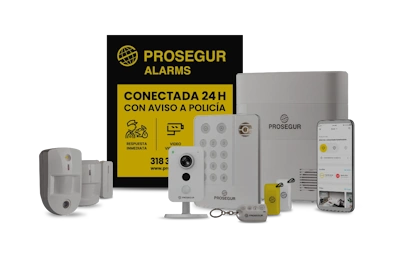
Segurma Alarms from €19.90/month
Includes a control panel, 2 detectors with camera, a presence detector, a deterrent plaque, a keypad with siren, a remote control with SOS button and 4 tags.

Sector Alarm Alarms from €39.90/month
Includes installation, equipment and the essential components (such as central unit, control panel, motion detector with camera, smoke detector, vibration/door detector, smart keys and deterrent plaques).
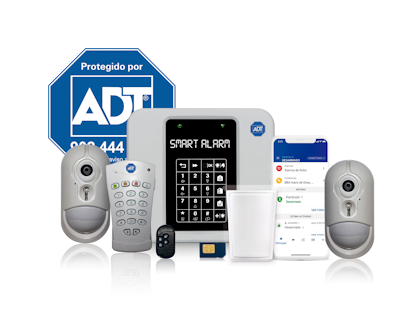
Yoigo Alarms from €19.90/month
The kit includes a smart panel with camera, a deterrent plaque, a motion sensor with camera, an additional motion sensor, a magnetic door/window detector and a mobile app for remote management. Installation is free and the system is connected 24/7 to ADT's Alarm Receiving Centre, with police notification.


Sicor Alarms from €19.90/month
Includes installation, equipment and the essential components (such as central unit, control panel, motion detector with camera, smoke detector, vibration/door detector, smart keys and deterrent plaques).

Search for an invoice
We just need your latest bill so we can analyse your current usage.

We speak with you
In a free 5-minute call, an adviser will show you the best options on the market.

Start saving
We take care of the entire process, and you start saving automatically.
More than 70,000 customers already trust Quecomparo.es
Find out all about alarms
Here you’ll find answers to the most frequently asked questions about alarm systems: installation, how they work, maintenance and everything you need to know before making a decision.

Alarm comparisons
We’ve compared the leading alarm brands and models on the market so you can see at a glance how they differ in terms of security, technology and services.
Prices for alarms
Find out how much it costs to install an alarm system in your home or business, and what factors affect the price. We’ll help you understand what you’re paying for and why.
Frequently Asked Questions?
What types of security alarm are there?
Common types of security alarm include wired, wireless, motion-detection, door and window sensor, and video surveillance alarms.
What's the difference between wired and wireless alarms?
Wired alarms need physical cables to connect the components, whereas wireless alarms use radio signals. Wireless alarms are easier to install and can adapt to different set-ups.
How do security alarms work? Are they connected to the police or to a monitoring centre?
Security alarms can be connected to a monitoring centre or send notifications through mobile apps. When they detect an intrusion, they trigger audible sirens and, if connected to a monitoring centre, the centre contacts the police or security personnel.
Can I install a security alarm myself, or do I need to hire a professional?
Some security alarms are suitable for DIY installation, particularly wireless ones. However, to ensure correct installation and get the most out of the system, hiring a security professional may be advisable.
How much does it cost to install and maintain a security alarm?
Prices vary depending on the provider, the type of alarm and any additional services. You’ll find options ranging from affordable basic systems to more complete systems with professional monitoring, where the monthly price usually reflects the services included.
What monitoring services are available and how much do they cost?
Monitoring services can include 24-hour monitoring, notification of the authorities, real-time video surveillance and emergency response. Prices vary depending on the provider and the level of service you want.
¿Cuáles son los dispositivos complementarios que se pueden agregar a un sistema de alarma de seguridad?
Some additional devices include security cameras, smoke/fire sensors, motion sensors, smart locks and home automation systems.
What additional devices can be added to a security alarm system?
Yes, many security alarms are compatible with smart home and home automation systems. This allows different security devices and functions to be integrated and controlled centrally.
Our Customer Service Managers will guide you through the entire process, resolve any issues and ensure that your new contract or switch to another provider goes smoothly.
What else can I do to improve the security of my home or business, besides installing an alarm?
As well as installing an alarm, you might consider measures such as adequate outdoor lighting, secure locks, visible security cameras, reinforcing doors and windows, and adopting good security habits, such as not sharing sensitive information on social media.
What are the most common pros and cons of home security and alarm companies?
- Protection and security: the main advantage of a security alarm is the protection and security it provides. It acts as a deterrent to criminals and can alert both you and the authorities in the event of a break-in or emergency.
- Peace of mind: knowing your home or business is protected 24 hours a day gives you peace of mind. You can enjoy your free time or sleep better knowing you’re taking active steps to protect your loved ones and your belongings.
- Reduced risk: a security alarm can reduce the risk of burglary, break-ins, vandalism and other crimes. By detecting a threat quickly, immediate action can be taken to minimise the damage and improve the chances of catching the offenders.
- Professional monitoring: many alarm systems offer professional monitoring services, where your property is watched continuously. That means that even when you’re not there, trained staff are ready to respond to any event and contact the authorities if needed.
- Cost: taking out a security alarm involves upfront installation and equipment costs, and there may also be monthly costs for monitoring and maintenance. This is worth factoring in, particularly on a limited budget.
- False alarms: security alarms can produce false alarms due to human error, pets, bad weather or other circumstances. These false alarms can be a nuisance to you and your neighbours, and may lead to additional costs if the authorities have to attend.
- Reliance on electricity and an internet connection: some security alarm systems rely on electricity and a stable internet connection to work properly. In the event of a power cut or connection failure, the system could be compromised.
- Maintenance and updates: security alarm systems need regular maintenance and, occasionally, equipment or software updates to keep performing at their best. That involves a degree of responsibility and additional long-term costs.

